
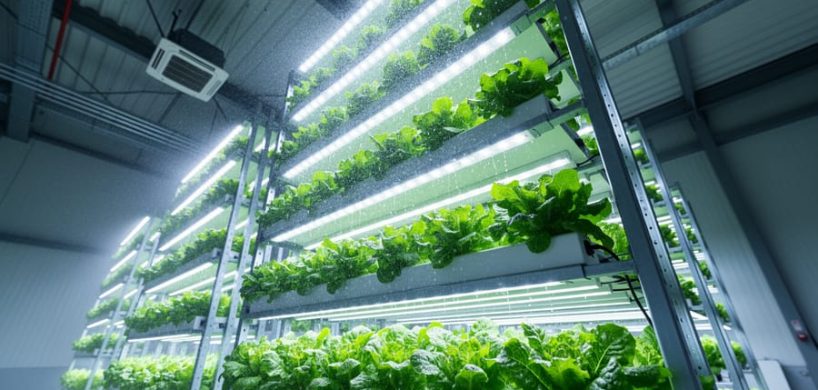
Vertical urban agriculture is the practice of growing food crops in vertically stacked layers within city environments, typically using controlled-environment agriculture technology in buildings, shipping containers, or modular structures. Instead of sprawling across acres of rural land, these farming systems rise upward, transforming warehouses, rooftops, and underutilized urban spaces into year-round production facilities that bring fresh produce closer to the people who consume it.
This approach to urban agriculture addresses a pressing challenge: feeding a growing urban population expected to reach 68% of humanity by 2050 while reducing the environmental footprint of conventional food systems. Traditional agriculture requires vast amounts of arable land, water, and transportation infrastructure to deliver food from rural farms to urban consumers. Vertical farming flips that model by integrating food production directly into the urban fabric, slashing food miles and creating resilient local supply chains that continue operating even when global distribution networks face disruption.
The technology behind vertical farms combines hydroponics, aeroponics, or aquaponics with LED lighting systems, climate controls, and increasingly sophisticated automation. Sensors monitor every variable from nutrient levels to humidity, while AI-driven systems optimize growing conditions for specific crops. The result is production rates that can exceed traditional farming by 10 to 20 times per square foot of growing area, using up to 95% less water in the process.
But vertical farming isn’t a silver bullet for all food production challenges. High energy costs, significant startup investments, and crop limitations mean these systems currently work best for leafy greens, herbs, and certain specialty crops rather than staple grains or root vegetables. This article explores how vertical urban agriculture actually operates, the different systems and technologies involved, practical applications already proving successful in 2026, and an honest look at where this innovation excels and where traditional methods still hold advantages.
What Vertical Urban Agriculture Means
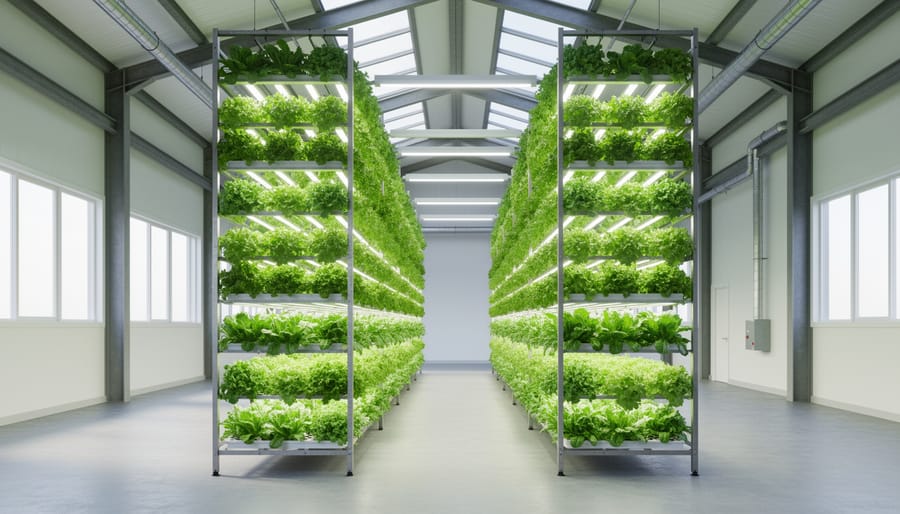
Vertical urban agriculture represents a fundamental shift in how we produce food, turning the traditional farm model on its head, literally. At its core, this approach grows crops in vertically stacked layers inside city buildings, warehouses, or specially designed structures, using controlled-environment systems that eliminate dependence on weather, seasons, or conventional soil.
The defining characteristic that separates vertical urban agriculture from traditional farming is its three-dimensional use of space. Where conventional agriculture spreads horizontally across acres of land, vertical systems build upward, stacking growing beds in towers that can reach several stories high within a single facility. This spatial efficiency makes it possible to produce significant quantities of food in dense urban areas where land comes at a premium or isn’t available at all.
Understanding the vertical farming basics requires grasping several key concepts:
- Vertical Farming
- The practice of growing crops in vertically stacked layers, typically indoors, using controlled-environment technology to optimize plant growth independent of external weather conditions.
- Controlled Environment Agriculture (CEA)
- An advanced farming method that uses technology to regulate temperature, humidity, light, and nutrients, creating optimal growing conditions year-round regardless of outdoor climate.
- Urban Agriculture
- The cultivation, processing, and distribution of food in or around urban areas, encompassing rooftop gardens, community plots, and vertical farms within city boundaries.
- Indoor Farming
- Food production that takes place entirely within enclosed structures, protected from external environmental variables and often relying on artificial lighting systems.
What distinguishes vertical urban agriculture from a rooftop garden or community plot is the level of environmental control and technological integration. These aren’t simply plants growing in city spaces, they’re sophisticated production systems where every variable affecting plant growth gets monitored and adjusted. LED lighting replaces sunlight, nutrient solutions replace soil, and sensors replace guesswork.
This controlled approach means vertical farms can operate anywhere with electricity and water access, regardless of climate, soil quality, or available outdoor space. A vertical farm in Alaska can produce fresh lettuce in January just as effectively as one in California, fundamentally decoupling food production from geography and season.
How Vertical Urban Farming Works
Growing Systems and Techniques
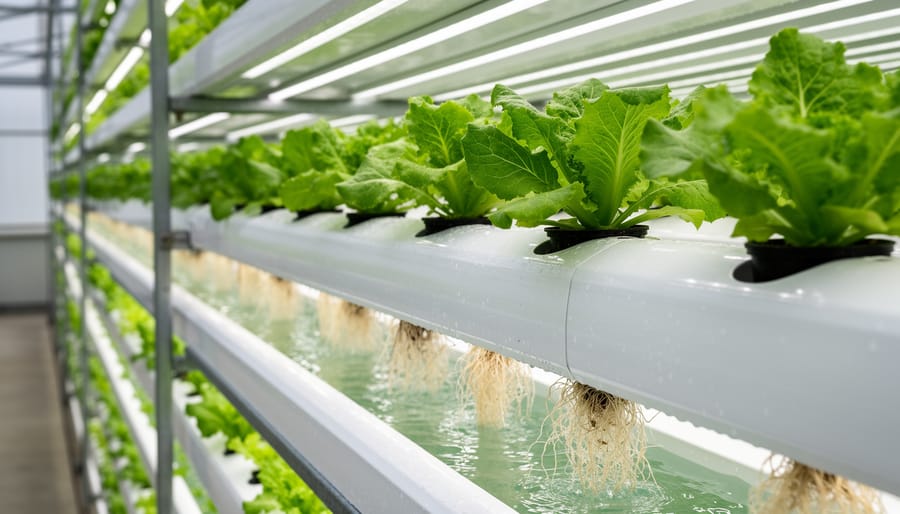
Vertical farms rely on three core soilless cultivation methods that make efficient use of vertical space while precisely controlling how plants receive water and nutrients.
Hydroponics grows plants in inert media like perlite or coconut coir, with roots submerged in or regularly flooded by nutrient-enriched water solutions. Systems range from deep water culture (roots suspended in oxygenated nutrient baths) to nutrient film technique (thin streams of solution flowing past roots). Because hydroponics nutrients are delivered directly to roots in carefully balanced concentrations, plants grow faster than in soil and farmers can stack growing trays vertically without worrying about soil weight or degradation. Water recirculates through closed loops, cutting consumption by 90% compared to field agriculture.
Aeroponics suspends plant roots in air and mists them with nutrient solution at regular intervals. This method uses even less water than hydroponics, sometimes 95% less than traditional farming, because only a fine spray contacts roots, and excess mist gets captured and reused. The constant oxygen exposure to roots accelerates growth rates and reduces disease risk, though the systems require more precise engineering and monitoring.
Aquaponics integrates fish farming with plant cultivation in a symbiotic cycle: fish waste provides organic nutrients for plants, while plants filter and clean water that returns to fish tanks. This creates a self-sustaining ecosystem that produces both vegetables and protein, though it demands more biological expertise and careful balance between fish health and plant needs.
Technology and Automation
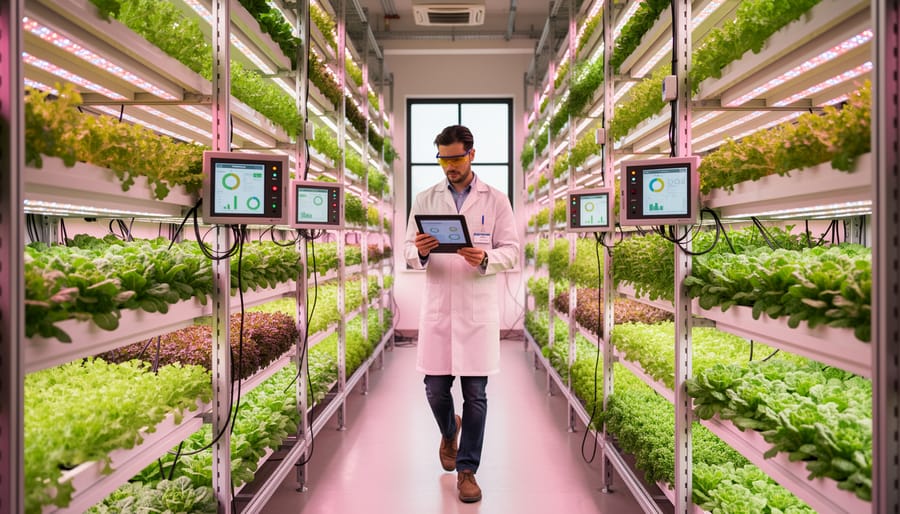
Sensors embedded throughout vertical farms continuously monitor dozens of environmental variables, temperature, humidity, CO2 levels, pH balance, nutrient concentration, and root zone moisture. These devices feed data to centralized control systems that adjust conditions in real-time, maintaining optimal growth parameters for each crop variety without human intervention.
IoT networks connect every component of the farm, from irrigation pumps to ventilation fans. When a temperature sensor detects rising heat, the system automatically increases airflow or adjusts cooling systems. If nutrient levels drop below threshold values, dosing pumps inject precise amounts of minerals into the water supply. This constant micro-adjustment creates stable growing conditions that traditional farmers can only approximate.
Machine learning algorithms analyze historical data to predict plant needs before problems arise. By recognizing patterns in growth rates, nutrient uptake, and environmental responses, these systems forecast when equipment might fail or when pest pressure could increase. Predictive maintenance schedules replace reactive repairs, preventing crop losses from sudden system failures.
Lighting schedules adapt to each growth stage. Young seedlings receive different light spectrums and intensities than plants nearing harvest. Automated systems dim lights during periods when photosynthesis efficiency drops, cutting energy costs without sacrificing yield. Some farms now use algorithms that adjust lighting throughout the day to match natural circadian rhythms, improving both plant health and nutritional content.
Data analytics platforms aggregate information across multiple growing cycles, identifying which environmental combinations produce the best results. Farmers refine their recipes, specific combinations of light, nutrients, and climate, based on quantifiable outcomes rather than intuition. This precision dramatically reduces crop failure rates and labor hours spent on manual monitoring, making vertical farms increasingly competitive with conventional agriculture.
Main Types of Vertical Urban Agriculture Systems
Vertical urban agriculture systems vary significantly in structure and scale, each designed to suit different urban contexts, investment levels, and production goals. Understanding these models helps match the right system to specific needs and constraints.
The most common configurations include:
- Warehouse conversions, repurposed industrial buildings retrofitted with vertical growing infrastructure, offering large production capacity in existing urban structures
- Purpose-built vertical farms, facilities designed from the ground up for controlled-environment agriculture, with optimized layouts and integrated systems
- Modular container farms, standardized shipping containers converted into self-contained growing units, providing scalability and mobility
- Rooftop systems, vertical farms installed atop existing buildings, utilizing unused urban space while reducing building cooling costs
- Building-integrated agriculture, farms incorporated into architectural design during new construction, creating dual-purpose structures
Warehouse conversions represent the most prevalent model in 2026. Companies take vacant industrial buildings in urban areas and install vertical growing racks, LED systems, and environmental controls. This approach capitalizes on existing infrastructure and affordable real estate in deindustrialized neighborhoods. Former manufacturing facilities, distribution centers, and parking structures all work well. The main advantages are lower initial construction costs compared to new builds and quick deployment timelines. These operations typically serve regional markets and wholesale distribution networks.
Purpose-built vertical farms offer superior efficiency through custom engineering. Every aspect, from ceiling heights to drainage systems to airflow patterns, is optimized for plant production. While construction costs run higher, operational efficiency gains often justify the investment for large-scale commercial operations. These facilities can produce millions of pounds of greens annually and usually include processing and packaging areas integrated into the workflow.
Shipping container farms provide flexibility and modularity. Each 40-foot container becomes a climate-controlled growing chamber that can be stacked, connected, or operated independently. Restaurants use single containers for on-site herb production. Schools deploy them for educational programs. Grocery chains position them in parking lots for hyperlocal produce. The standardized format allows manufacturing at scale, while transportability means farms can relocate if markets shift.
Rooftop installations make productive use of underutilized urban space. Beyond growing food, these systems provide building insulation, manage stormwater runoff, and reduce urban heat island effects. Hotels and restaurants favor this model for farm-to-table marketing while offsetting their food purchases.
Building-integrated agriculture represents the future direction, residential towers with farming floors, office buildings that grow their cafeteria produce, and mixed-use developments combining agriculture with housing. Though still relatively rare, this model demonstrates how cities might fundamentally redesign urban space to incorporate food production as infrastructure rather than afterthought.
Where and How Vertical Farms Are Applied
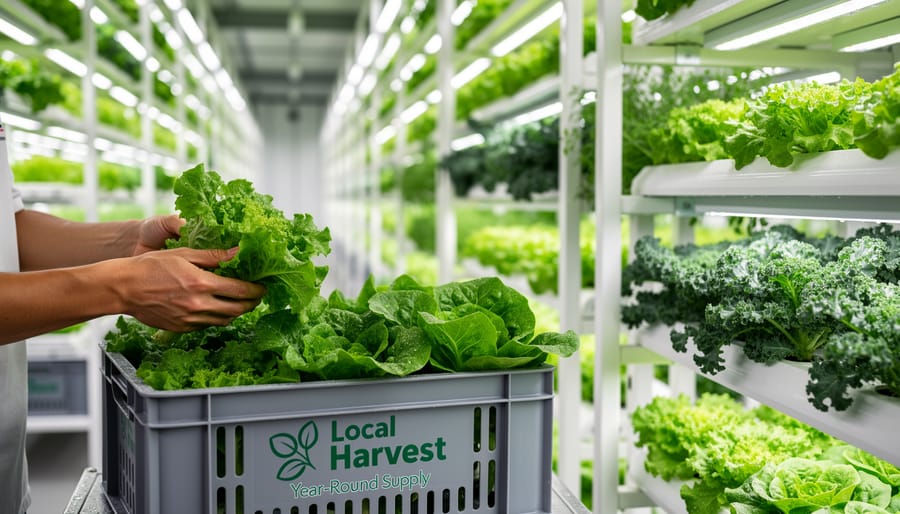
Vertical farms have moved beyond experimental projects into practical applications across diverse urban settings. Commercial operations now supply local grocery stores and farmers’ markets with fresh leafy greens, herbs, and microgreens harvested within hours of sale. These farms typically operate in converted warehouses or purpose-built facilities, producing year-round harvests that eliminate the uncertainty of seasonal gaps and weather disruptions.
Restaurants and retailers increasingly partner directly with vertical farms to secure consistent supplies of specialty produce. High-end establishments value the ability to request specific varieties, rare lettuce types, unusual herbs, edible flowers, grown to order without pesticide residues. Some grocery chains have installed compact vertical farming units directly in stores, allowing customers to pick greens grown on-site that morning.
Institutional settings like schools and hospitals use vertical farms for both food production and educational purposes. School-based systems teach students about agriculture, nutrition, and technology while supplementing cafeteria offerings with fresh produce. Hospitals integrate vertical gardens to provide patients with nutrient-dense greens and create therapeutic green spaces that improve recovery environments.
Community food projects deploy vertical farming to address food access inequities in underserved neighborhoods. These installations tackle food deserts, areas where residents lack nearby sources of affordable fresh produce, by establishing hyperlocal growing capacity. Shipping container farms and rooftop systems require minimal land, fitting into spaces that traditional agriculture couldn’t use. These projects often integrate workforce development, training residents in agricultural technology while strengthening community food systems.
Research facilities use vertical farms as controlled laboratories for crop science, testing how different light wavelengths, nutrient formulations, and environmental conditions affect plant development. Universities and agricultural companies optimize growing protocols that commercial operators then adopt.
Across all applications, vertical farms address supply chain vulnerabilities exposed by recent disruptions. Local production means fewer transportation breakdowns, less spoilage, and reduced dependence on distant growing regions affected by drought or extreme weather. Urban consumers increasingly prioritize locally-sourced food with transparent origins, and vertical farms deliver produce grown within their own zip codes.
Benefits for Urban Environments and Food Systems
Vertical urban agriculture delivers tangible environmental and social benefits that address some of the most pressing challenges facing modern food systems. By reimagining how and where we grow food, these systems offer solutions that traditional agriculture struggles to provide in densely populated areas.
Water conservation stands out as one of the most dramatic advantages. Vertical farms use recirculating hydroponic and aeroponic systems that capture and reuse water with remarkable efficiency, requiring up to 98% less water than conventional field agriculture. In regions facing water scarcity or drought conditions, this efficiency transforms what’s possible for local food production. The controlled environment means no water is lost to evaporation, runoff, or deep soil absorption.
The elimination of chemical pesticides and herbicides represents another fundamental shift. Sealed growing environments prevent pest infiltration, removing the need for toxic chemicals entirely. Consumers get genuinely clean produce, while surrounding ecosystems avoid contamination from agricultural runoff. This controlled approach also means no soil degradation, no fertilizer pollution entering waterways, and no contribution to the dead zones that plague coastal areas near major farming regions.
Year-round production independent of weather patterns gives cities resilient food supplies. A late frost, drought, or unseasonable heat wave that devastates traditional farms doesn’t touch indoor vertical operations. This reliability matters enormously for food security, particularly in regions experiencing climate instability.
The environmental advantages extend across multiple dimensions:
- Drastic reduction in transportation emissions by growing food where people live, cutting food miles from thousands to mere blocks
- Zero pesticide runoff protecting urban waterways and reducing chemical exposure for workers and consumers
- Productive use of underutilized urban spaces including vacant warehouses and rooftops rather than consuming additional farmland
- Creation of green jobs in urban centers, bringing agricultural employment to cities
- Improved food access in underserved neighborhoods and food deserts where fresh produce is scarce
Vertical farms also grow food in locations previously considered impossible: cities with contaminated soil, harsh climates, or virtually no arable land. This capability matters for food sovereignty, allowing communities to reduce dependence on long-distance supply chains vulnerable to disruption. When produce travels ten blocks instead of a thousand miles, it arrives fresher, retains more nutrients, and requires no preservatives or extended refrigeration.
The alignment with broader sustainability goals is clear. Vertical urban agriculture supports climate adaptation, resource conservation, and equitable food access simultaneously, addressing environmental and social dimensions of urban resilience in ways that complement rather than compete with rural farming.
Current Challenges and Considerations
Despite its promise, vertical urban agriculture faces several practical hurdles that prospective growers and investors need to understand clearly. The most immediate barrier is cost. Setting up a commercial vertical farm requires substantial upfront investment, climate control systems, specialized LED arrays, racking infrastructure, and monitoring technology can easily run into hundreds of thousands or millions of dollars depending on scale. Traditional farms spread these costs over larger acreages with lower-tech equipment.
Energy consumption presents another significant consideration. While vertical farms eliminate pesticides and slash water use, their reliance on artificial lighting and HVAC systems creates a hefty electricity demand. In regions without affordable renewable energy access, this can undermine sustainability claims and squeeze profit margins. Researchers are developing more efficient LED spectrums and passive climate designs, but energy remains a fundamental cost driver in 2026.
Crop limitations also constrain commercial viability. Vertical systems excel at leafy greens, herbs, and certain berries, but staple crops like wheat, corn, and potatoes remain economically impractical due to their lower value-per-square-foot and longer growing cycles. This restricts vertical farms to niche markets rather than broad food security solutions.
The economic equation gets trickier at scale. Many vertical farming startups have struggled to achieve profitability, discovering that high operational costs offset premium pricing advantages. Labor efficiency through automation helps, but requires additional capital and technical expertise that not all operations can marshal.
Speaking of expertise, successful vertical farming demands knowledge spanning horticulture, engineering, data analytics, and business management, a rare combination. Finding or training qualified staff adds another layer of complexity. However, the growing community of practitioners sharing indoor grower tips and operational insights is helping lower this knowledge barrier.
These challenges are real but not insurmountable. Falling LED costs, improving energy efficiency, better automation software, and accumulated operational knowledge are steadily making vertical farming more accessible and economically viable.
Frequently Asked Questions
What crops grow best in vertical farms?
Leafy greens like lettuce, kale, spinach, and arugula thrive in vertical farms, along with herbs such as basil, cilantro, and mint. Microgreens, strawberries, and some tomato varieties also perform well, while grain crops and root vegetables requiring deep soil remain challenging due to space and energy requirements.
How much does it cost to start a vertical farm?
Initial investment varies dramatically by scale, from $50,000 for a small shipping container operation to several million dollars for commercial warehouse facilities. Costs include infrastructure, LED lighting systems, climate control equipment, automation technology, and working capital for the first production cycles before revenue begins.
Is vertical farming more sustainable than traditional agriculture?
Vertical farms use up to 95% less water than conventional farming and eliminate pesticide needs entirely, but they require substantial electricity for lighting and climate control. Their sustainability depends heavily on energy sources, facilities powered by renewable energy offer clear environmental advantages, while those relying on fossil fuel-based grids may offset some benefits.
How does produce from vertical farms compare in taste and nutrition?
Nutritional content matches or exceeds field-grown produce, with some studies showing higher vitamin levels due to optimized growing conditions and immediate harvest-to-consumer delivery. Taste quality depends on specific growing protocols and crop varieties, though many chefs and consumers report fresh, clean flavors without the bitterness sometimes caused by environmental stress in outdoor crops.
Beyond these fundamentals, understanding vertical farming’s role in urban food systems requires realistic expectations. Can vertical agriculture feed entire cities? Not independently. Current technology and economics make vertical farms excellent for supplementing fresh produce supplies, particularly leafy greens that typically travel long distances and spoil quickly. They excel at providing neighborhoods with hyper-local, pesticide-free options year-round, reducing pressure on supply chains and offering resilience during weather disruptions or transportation challenges.
Energy consumption remains the technology’s most debated aspect. While vertical farms conserve water and land dramatically, their lighting requirements mean energy efficiency directly impacts both environmental footprint and operating costs. Advances in LED technology continue lowering energy needs, modern systems use 40% less electricity than early installations, and farms increasingly integrate solar panels or purchase renewable energy credits to offset their grid dependence.
The economic question centers on whether vertical farms can compete with conventional agriculture’s established efficiency at scale. For high-value crops sold directly to local markets, restaurants, or retail partners emphasizing provenance and freshness, the model works now. Expanding to staple crops like wheat or rice isn’t feasible with current technology, nor is it the intended application. Vertical farming carves out a specific niche in urban food systems rather than attempting wholesale replacement of traditional agriculture, functioning as a complementary tool that addresses particular needs conventional methods struggle to meet in dense city environments.
Vertical urban agriculture represents a meaningful evolution in how we think about food production in cities. By combining technology with agricultural fundamentals, it offers practical solutions to real challenges: limited space, water scarcity, supply chain vulnerabilities, and the growing demand for fresh, locally-grown produce. The systems we’ve explored, from hydroponics to automated climate control, demonstrate that growing food vertically isn’t just possible; it’s increasingly viable for commercial operations, community projects, and institutional applications.
This approach won’t replace traditional farming, nor should it. Rural agriculture remains essential for staple crops and large-scale production. Instead, vertical farming fills specific gaps in our food systems, particularly in dense urban areas where conventional agriculture isn’t feasible. It shortens supply chains, reduces transportation emissions, and provides fresh options in neighborhoods that lack access to quality produce.
The challenges, energy costs, initial investment, limited crop variety, are substantial but not insurmountable. Innovations in LED efficiency, renewable energy integration, and automation are steadily improving the economics. As technology advances and more operators gain expertise, vertical farming is becoming more accessible to different scales of producers.
For cities committed to resilience and sustainability, vertical urban agriculture offers a tangible path forward. It’s infrastructure that produces food where people live, adapts to climate pressures, and uses resources more efficiently than many alternatives. The technology is here. The question now is how quickly we’ll integrate it into our urban landscapes.