
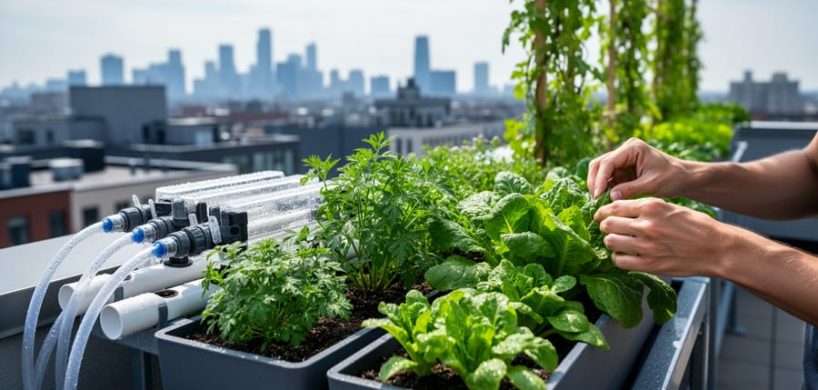
Urban agriculture is the practice of cultivating, processing, and distributing food within cities and towns, transforming underutilized spaces into productive growing environments. From rooftop gardens and vertical farms to community plots and hydroponic greenhouses, this approach brings food production directly into the urban landscape where most of the world’s population now lives.
The concept matters because cities face mounting pressure to address food security, environmental resilience, and sustainability challenges. By 2026, over 60% of the global population resides in urban areas, yet nearly all their food travels hundreds or thousands of miles from rural farms. Urban agriculture shortens that distance dramatically, reducing transportation emissions while providing fresh produce to neighborhoods that often lack access to quality food options.
Unlike traditional arable farming innovation happening in rural landscapes, urban agriculture operates within the constraints and opportunities of city environments. Space is limited and expensive, which drives innovation in vertical growing systems, intensive production methods, and technology integration. These systems often use 90% less water than conventional farming through recirculating hydroponic or aquaponic setups, and they can produce yields per square foot that would be impossible in field agriculture.
This article breaks down exactly how urban agriculture functions across different scales and technologies. You’ll discover the operational principles that make city farming viable, explore the diverse forms it takes from windowsill herb gardens to commercial greenhouse operations, and see real applications already reshaping how cities feed themselves. Whether you’re considering starting your own urban growing project or simply want to understand this emerging movement, the following sections provide the foundational knowledge to grasp both the potential and the practical realities of farming in cities.
What Urban Agriculture Means in Practice
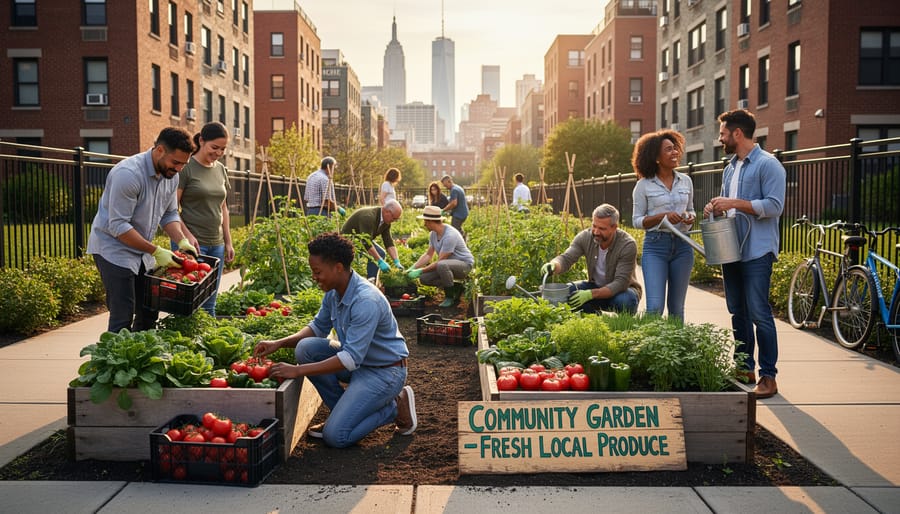
Urban agriculture transforms unused city spaces into productive growing environments. You’ll find it on building rooftops in Brooklyn, in converted warehouses in Singapore, and within shipping containers in Detroit. These operations share a defining characteristic: they grow food where people live and work, not hundreds of miles away in rural areas.
The physical forms vary widely. A rooftop greenhouse might produce tomatoes and herbs for restaurants two floors below. A vertical farm in an industrial district could stack growing trays twenty feet high, producing lettuce under LED lights year-round. Community gardens convert vacant lots into neighborhood food sources. Each adapts to the constraints and opportunities of the urban environment.
What sets urban agriculture apart from traditional farming isn’t just location. Conventional farms operate on acres of open land with natural rainfall and sun exposure. Urban operations work within tight spatial constraints, often indoors or in modified outdoor spaces. They engineer growing conditions rather than depend on them. A traditional farm might plant a single crop across fifty acres. An urban vertical farm grows multiple varieties in a 5,000-square-foot warehouse, controlling light spectrum, temperature, and humidity with precision.
The integration with city infrastructure matters too. Urban farms connect to municipal water systems, tap into building climate control, and sometimes use waste heat from adjacent facilities. Food travels blocks instead of hundreds of miles. A head of lettuce harvested Tuesday morning can reach a consumer by Tuesday afternoon, not after days in refrigerated transport. This proximity reshapes freshness, reduces spoilage, and shortens supply chains in ways impossible for rural operations.
Urban agriculture also responds differently to land economics. Where farmland costs hundreds per acre, city real estate runs thousands per square foot. This drives innovation in vertical growing, stacking, and space optimization that traditional agriculture rarely requires.
How Urban Agriculture Works
Resource Management and Efficiency
Urban agriculture succeeds in cities by treating resources as closed loops rather than linear inputs. Water recycling stands at the core of this efficiency, systems like nutrient film technique and aeroponics can reduce water use by 90% compared to conventional farming by capturing runoff, filtering it, and recirculating it through growing systems. Some facilities integrate condensate recovery to harvest moisture from climate control systems, further minimizing freshwater demand.
Nutrient management follows a precision approach. Instead of broadcasting fertilizers across fields, urban farms deliver exact formulations directly to plant roots based on growth stage and real-time monitoring. This targeted feeding reduces nutrient waste and prevents runoff pollution that plagues traditional agriculture.
Energy represents the largest operational cost in controlled environment systems. Efficient LED grow lights now consume 40-60% less electricity than older technologies while delivering optimal light spectra for photosynthesis. Smart climate systems adjust temperature and humidity only when needed, cutting unnecessary heating and cooling cycles.
Waste reduction closes the loop. Plant trimmings become compost or livestock feed. Packaging materials from supplies get reused. Some operations partner with local breweries or coffee roasters to repurpose spent grains and grounds as growing media. This circular approach transforms potential waste streams into inputs, making urban farms more sustainable and economically viable in expensive urban real estate.
Technology Integration
Modern urban agriculture relies on interconnected digital systems that monitor and adjust growing conditions in real time. Sensors track variables like temperature, humidity, light intensity, and nutrient concentrations, feeding data to centralized platforms that identify patterns and trigger automated responses. When humidity drops below optimal levels in a vertical farm, for example, misting systems activate automatically without human intervention.
Machine learning algorithms analyze historical crop performance data to predict yields weeks in advance, helping operators plan harvests and manage inventory more precisely. These systems learn from each growing cycle, refining their recommendations for lighting schedules, nutrient delivery timing, and climate adjustments based on what actually produced the best results rather than generic formulas.
Automation handles repetitive tasks like seeding, transplanting, and harvesting in larger commercial operations, reducing labor costs while maintaining consistency. Computer vision systems can identify early signs of disease or nutrient deficiencies by analyzing leaf color and texture, enabling intervention before problems spread.
Data analytics platforms aggregate information across multiple growing cycles to reveal inefficiencies, excess water usage during specific growth stages, unnecessary lighting during periods when natural light suffices, or nutrient concentrations that exceed what crops actually absorb. This continuous optimization reduces input waste substantially while maintaining or improving output quality.
Forms of Urban Agriculture
Vertical Farming Systems
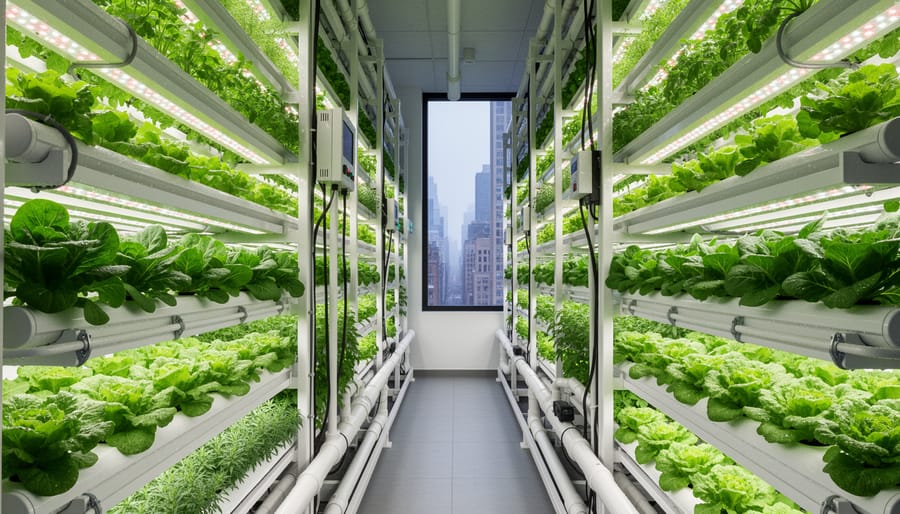
Vertical farming takes urban agriculture to new heights, literally. These systems stack growing layers in climate-controlled indoor facilities, using LED lighting tuned to specific wavelengths that plants need for photosynthesis. What is vertical farming boils down to this: maximizing production per square foot by building up instead of out, which makes it ideal for cities where land costs are prohibitive.
The controlled environment eliminates weather unpredictability and extends growing seasons year-round. Growers can dial in temperature, humidity, CO2 levels, and light intensity to optimize conditions for specific crops, leafy greens, herbs, and strawberries thrive in these setups. This precision enables higher yield per area compared to conventional field farming, often producing multiple harvests where traditional farms get one.
Modern vertical farms integrate automation for seeding, nutrient delivery, and harvesting, reducing labor costs while maintaining consistency. The closed-loop systems recycle water and nutrients efficiently, using up to 95% less water than soil-based agriculture. While the initial infrastructure investment runs high and energy costs for lighting remain a consideration, the technology continues advancing rapidly, LED efficiency improves and renewable energy integration becomes more common, making vertical farming increasingly viable for commercial urban agriculture operations.
Hydroponic and Soil-Based Methods
Urban farms employ two distinct growing philosophies: soilless systems and container-based soil approaches. Each offers specific advantages depending on space constraints, resource availability, and production goals.
Soilless hydroponics methods deliver nutrients directly through water solutions, eliminating the weight and bulk of soil. This approach reduces water consumption by up to 90% compared to traditional methods, since systems recirculate nutrient solutions rather than losing moisture to soil. Hydroponics also accelerates growth rates, as plants access nutrients more efficiently without expending energy on extensive root systems. The controlled nature makes these systems ideal for vertical farms and indoor operations where precision matters.
Container-based soil systems, by contrast, use growing media in portable vessels suited to rooftops, balconies, and temporary installations. Soil buffers against pH fluctuations and nutrient imbalances, making these systems more forgiving for beginners or community gardens. They support a wider variety of crops, including root vegetables that struggle in hydroponic setups. The trade-off involves higher water requirements and added structural weight that limits vertical stacking potential.
Community and Commercial Models
Community-focused urban agriculture typically operates through shared gardens, school projects, and nonprofit initiatives that prioritize education, food access, and neighborhood cohesion. These projects often run on volunteer labor and grants, measuring success by community engagement rather than profit margins. They turn vacant lots into productive green spaces where residents learn growing skills while addressing food insecurity in underserved areas.
Commercial urban agriculture, by contrast, focuses on scalable food production and market viability. These operations range from small rooftop farms supplying local restaurants to large vertical farming facilities producing thousands of pounds weekly for grocery chains. They require significant capital investment in infrastructure, technology, and trained staff. Commercial growers optimize for yield, consistency, and year-round production to compete economically.
Both models strengthen urban food systems differently: community gardens build social capital and food literacy, while commercial operations increase local food supply and create jobs. Many cities see hybrid approaches emerging, where commercial farms incorporate educational programs or donate surplus produce to community organizations.
How Urban Agriculture Is Used Today
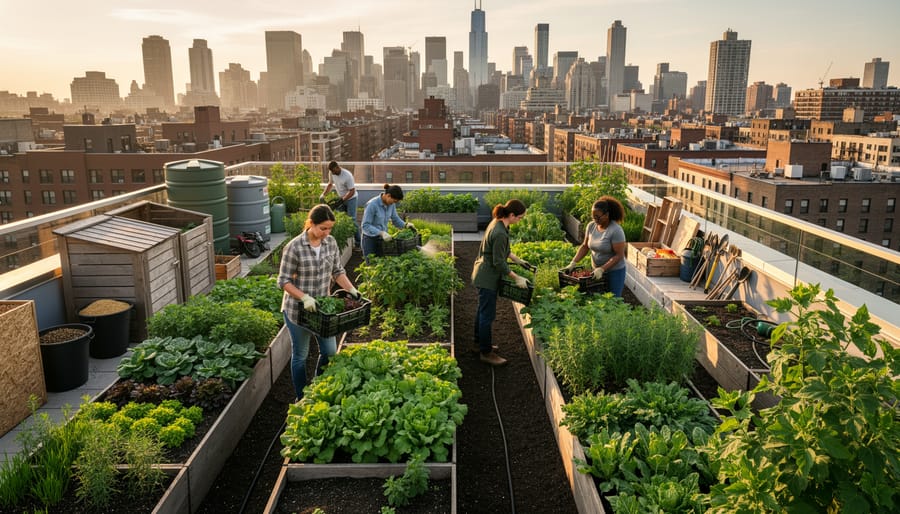
Urban agriculture serves multiple overlapping purposes in 2026, from feeding residents directly to reshaping how cities think about land use and community resilience. At its most fundamental level, urban farms supply fresh produce to neighborhoods that lack grocery stores or farmers markets. Research shows that urban agriculture improves access to nutritious food in underserved areas, reducing reliance on distant supply chains and offering residents affordable options harvested within walking distance. A rooftop farm in Brooklyn or a vertical operation in Detroit can stock corner stores and restaurants with greens, herbs, and vegetables picked hours earlier rather than days prior.
Beyond direct food provision, urban agriculture functions as an economic development tool. Commercial vertical farms employ local workers, supply restaurants seeking hyperlocal ingredients, and create revenue streams that circulate within the community. Small-scale growers sell at neighborhood markets, while larger operations negotiate contracts with institutional buyers like schools and hospitals. These enterprises inject activity into vacant lots, repurposed warehouses, and underutilized rooftops that might otherwise generate no economic value.
Urban agriculture applications span a wide range of contexts and scales:
- Direct food production for local consumption through community gardens, vertical farms, and rooftop operations
- Enhanced food security in neighborhoods classified as food deserts or areas with limited grocery access
- Educational programming teaching students and community members about growing techniques, nutrition, and sustainability
- Economic development via job creation, small business incubation, and revenue from fresh produce sales
- Environmental remediation projects using plants to improve soil quality and manage stormwater runoff
- Community building activities that bring neighbors together around shared growing spaces and harvest events
Educational institutions increasingly integrate urban farms into their curricula, using them as living laboratories where students learn biology, environmental science, and business fundamentals. Schools with onsite growing operations can demonstrate food systems concepts hands-on rather than abstractly, and some programs train participants for careers in agriculture technology and sustainable food production.
Cities also leverage urban agriculture for environmental benefits beyond food. Green infrastructure projects incorporate planted areas that absorb rainwater, reduce heat island effects, and improve air quality. What starts as a practical solution for growing food often delivers compounding returns across public health, economic, and ecological dimensions.
Benefits and Environmental Impact
Urban agriculture delivers measurable environmental benefits while requiring careful resource management to maximize its positive impact. The most significant advantage comes from compressed supply chains: produce grown on urban rooftops or in vertical farms travels meters rather than hundreds of kilometers to reach consumers, cutting transportation emissions by up to 90% compared to conventional systems. This proximity also means harvesting at peak ripeness rather than early for shipping, reducing food waste from spoilage.
Water management represents both a strength and a consideration. Controlled-environment farms typically use 70-95% less water than traditional field agriculture through recirculation systems that capture and reuse moisture. However, indoor operations require energy for lighting, climate control, and pumping, meaning the net environmental benefit depends on whether that energy comes from renewable sources. Solar-powered rooftop farms and operations connected to green energy grids achieve the strongest sustainability outcomes.
Urban farms turn potential waste streams into resources. Many operations convert food scraps and organic waste from nearby restaurants into compost or nutrient inputs, creating local circular economies. Some systems integrate with building infrastructure, using waste heat from data centers or industrial processes to warm greenhouse spaces during winter months, effectively recycling energy that would otherwise dissipate.
The carbon footprint equation varies by system type. Low-tech community gardens with minimal inputs and solar-powered greenhouses offer clear environmental wins. High-tech vertical farms must offset their energy consumption through efficiency gains and fossil fuel displacement in transport. Recent lifecycle analyses suggest that well-designed urban systems reduce overall emissions by 40-60% when accounting for eliminated shipping, reduced refrigeration needs, and minimized packaging.
Urban agriculture also connects to broader sustainable practices linking permaculture and food security by demonstrating how cities can integrate food production into their ecological frameworks. The technology continues evolving toward lower energy requirements and better resource optimization, making environmental performance progressively stronger.
Getting Started with Urban Agriculture
Starting urban agriculture doesn’t require industrial-scale investment or agronomic credentials, what matters is matching your approach to your available resources and goals. Whether you’re considering a small balcony garden or planning a commercial vertical farm, the fundamentals remain the same: assess your space, understand your constraints, and build gradually.
For individuals, the easiest entry point is container gardening on available outdoor space, balconies, rooftops, or small yards. Even a few square feet can support herbs, leafy greens, and compact vegetables. Low-cost methods like Jadam organic farming demonstrate that you don’t need expensive inputs to grow food successfully in limited spaces.
Businesses and community groups should start by defining objectives clearly. Are you addressing food access in underserved areas, creating a revenue-generating farm, or building an educational resource? Your answer shapes everything from site selection to technology choices. A community garden prioritizes accessibility and participation over yield optimization, while a commercial operation needs reliable production volumes and efficient operations from day one.
Technology investments should align with your scale and expertise. Simple drip irrigation and basic nutrient monitoring work well for beginners and smaller operations, while automated climate control and data analytics make sense when managing larger spaces or seeking commercial viability. Many successful urban farmers begin with simpler systems, prove the concept, then gradually incorporate more sophisticated tools as they learn what works in their specific environment.
Connect with local urban agriculture networks, universities, and extension programs, they offer practical knowledge about what grows well in your climate, local regulations, and available support resources. Most cities now have established urban farming communities willing to share experience with newcomers.
Common Questions About Urban Agriculture
Urban agriculture raises practical questions for anyone considering a system or evaluating its potential impact. While the field has demonstrated success across diverse contexts, understanding realistic outcomes, constraints, and considerations helps set appropriate expectations for projects of any scale.
Is urban agriculture profitable?
Profitability depends heavily on scale, technology investment, and market access. Commercial vertical farms with advanced automation can achieve competitive margins by producing premium crops year-round, while smaller community operations often prioritize social benefits over financial returns.
How much food can urban farms produce?
Production capacity varies dramatically by system type and available space. Advanced vertical farms can yield 10-20 times more per square foot than traditional field agriculture, though total output depends on footprint, crop selection, and growing cycles.
Is produce from urban farms safe?
Urban farms typically operate in controlled environments with monitored inputs, often achieving higher food safety standards than conventional agriculture. Soil contamination concerns are minimal in hydroponic systems, while proper testing protocols address any environmental risks in soil-based approaches.
Can urban agriculture solve food security issues?
Urban agriculture contributes meaningfully to local food access and resilience but works best as part of broader food systems rather than a complete replacement for traditional agriculture. It excels at providing fresh produce in underserved areas and reducing dependence on long supply chains during disruptions.
Regulatory frameworks for urban agriculture continue evolving as cities recognize both opportunities and the need for appropriate oversight. Zoning requirements, water usage permits, and commercial licensing vary significantly by location, making local research essential before launching any project. Many municipalities now have dedicated urban agriculture ordinances that clarify permitting processes and operational standards.
Scalability presents both technical and economic considerations. While the technology behind controlled environment systems scales reasonably well, capital requirements increase substantially with facility size. Energy costs, labor needs, and market demand must align to support expansion beyond pilot phases. Successful commercial operations typically start with proven crops and reliable local distribution channels before diversifying or expanding capacity.
Urban agriculture represents a practical response to the challenges facing modern food systems. By bringing production closer to consumers, it addresses food security concerns while reducing the environmental costs of long-distance transportation. The diverse approaches covered in this article, from vertical farms to community gardens, demonstrate that urban agriculture isn’t a single solution but a toolkit adaptable to different contexts, resources, and goals.
The field continues to evolve as technology improves efficiency and accessibility. Advances in automation, resource management, and crop optimization make urban farming more viable for both commercial operators and community initiatives. However, success still depends on careful planning, realistic assessment of resources, and understanding the trade-offs between different systems.
Urban Agriculture Development as a discipline reflects this maturity. Rather than positioning urban farming as a complete replacement for traditional agriculture, the focus has shifted toward integration, identifying where urban production makes sense economically and environmentally, and how it complements existing food infrastructure.
For those considering involvement in urban agriculture, whether as practitioners, supporters, or consumers, the opportunity lies in understanding what these systems can realistically deliver. They won’t solve all food system challenges, but they offer tangible benefits: fresher produce, reduced waste, educational opportunities, and stronger connections between urban communities and their food sources. That practical contribution, grounded in sound methods and appropriate technology, defines urban agriculture’s role in building more resilient cities.