
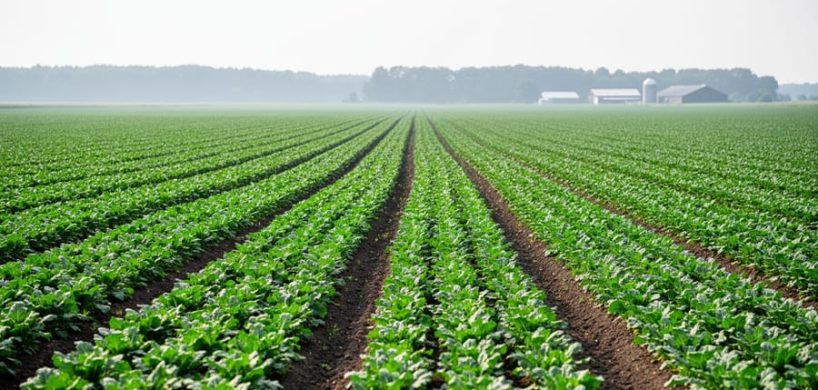
Monoculture farming is the practice of growing a single crop on the same land, season after season, typically across large, uniform fields. It’s built for efficiency. One crop means one planting schedule, one set of machinery, one harvest window, and predictable inputs, which is why the approach became so deeply rooted in modern agriculture.
It also explains why monoculture sits at the center of today’s farming debates. The sustainable agriculture movement began as a critique of soil erosion, chemical misuse, and monoculture itself, and those concerns still shape how growers think about soil health and long-term resilience. Regenerative farming responds with living roots year-round, greater crop diversity, integrated livestock, and less soil disturbance.
This article explains how monoculture works in practice, the forms it takes, why it persists, and how diversified and regenerative approaches compare. Traditional growers made sound choices with the tools and markets they had, and understanding those trade-offs is the first step toward newer options, including the controlled, tech-driven methods of vertical farming.
What Monoculture Farming Means
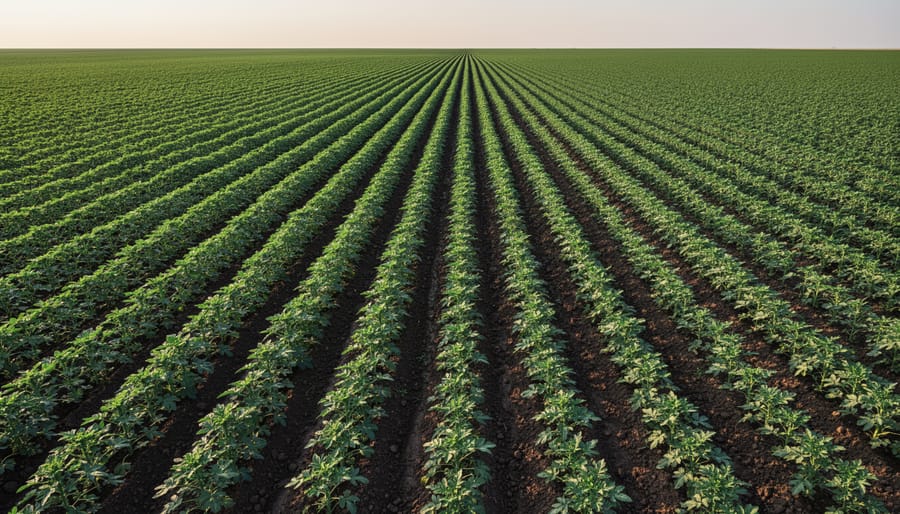
Monoculture farming means growing a single crop on a piece of land, usually the same variety planted across the whole field and harvested at about the same time. If you picture an unbroken sweep of corn or wheat running to the horizon, you’ve pictured it.
The practice spread for good reasons. Planting one crop makes it easy to use the same machinery from start to finish, so seeders, sprayers and harvesters can be matched to a single plant’s needs. Synchronized growth means predictable harvest windows, simpler planning and steadier supply for buyers. And because everything is standardized, larger operations can spread their costs across more acres. Traditional large-scale growers adopted this approach to feed growing populations efficiently, and it still does that job well in many places.
Timing matters when you use the term. A farmer might plant one crop in a single season and then switch to something else the next year. That’s monoculture within a season, and it overlaps with crop rotation. Long-term continuous monoculture is different: the same crop goes on the same land year after year. That repetition is the version most often discussed in the sustainable agriculture movement, which began partly as a critique of soil erosion, chemical misuse and monoculture farming.
A few terms help sort out the landscape:
- Monoculture
- Growing one crop, typically a single variety, on the same land at a time.
- Polyculture
- Growing several different crops together in the same space, so the field supports more than one plant type.
- Crop rotation
- Changing which crop is planted on a field from one season or year to the next.
- Cover crop
- A plant grown mainly to protect and feed the soil rather than to be harvested.
- Biodiversity
- The variety of living things, from plants and insects to microbes, found in a given area.
- Soil health
- How well soil functions as a living system, including its structure, nutrients and the organisms within it.
Seen together, these ideas form a spectrum rather than a simple good-versus-bad split. Monoculture sits at the focused, uniform end, while polyculture and rotation add variety over space or time. Regenerative farming pushes further, aiming to keep living roots in the ground year-round and maximize crop diversity, which is said to promote biodiversity and reduce reliance on monocultures.
How Monoculture Farming Works in Practice
A typical monoculture operation follows a tight, repeatable cycle. It starts with field preparation: clearing residue, working the soil, and setting up the seedbed for one crop. Next comes planting a single variety across the whole field, often in uniform rows at the same depth and spacing. From there, nearly everything runs on a synchronized schedule. Irrigation, fertilizing, crop protection, and finally harvest all happen in step, because every plant sits at the same growth stage.
Nutrients and pests are handled with inputs sized to that one crop’s needs. A grower can calculate a single fertilizer program and a single pest-scouting routine instead of juggling many. That predictability is a big reason the approach spread.
- One crop occupies each field.
- Planting and care follow uniform timing.
- Standardized equipment handles every task.
- Management depends on purchased or applied inputs matched to the crop.
- Harvest is concentrated into a narrow window.
Uniformity is what makes mechanization and planning so much easier. One planter setting, one combine configuration, and one labor schedule can cover hundreds of acres. Growers can forecast yields, book storage, and line up buyers with a fair amount of confidence.
The same uniformity, though, can concentrate risk. When thousands of identical plants share the same traits, a pest or disease that suits that variety can spread quickly, because there’s little variation to slow it down. Growing the same crop repeatedly also draws down the same nutrients from the soil, which pushes growers toward more inputs to compensate. This is one reason the sustainable agriculture movement began as a critique of practices like monoculture, alongside soil erosion and chemical misuse. Understanding both sides of this trade-off, efficiency on one hand and concentrated risk on the other, is the key to seeing why the conversation around monoculture continues.
Types of Monoculture Systems and the Alternatives They Are Compared With
Continuous vs. Rotational Monoculture
Continuous monoculture means planting the same crop on the same land year after year. Rotational monoculture still grows one crop per field in a given season, but the crop changes from season to season, say corn one year and soybeans the next. Both look uniform at planting time, yet they behave very differently over the long haul.
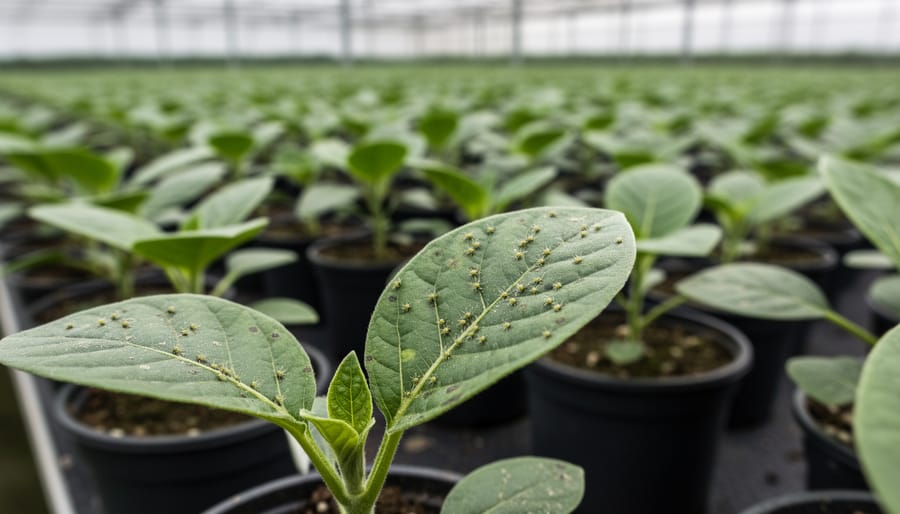
The difference shows up below the surface. A crop that returns to the same ground repeatedly draws down the same nutrients and keeps feeding the same pests and diseases. Research on agroecosystem practices notes that continuous monoculture increases pests since their host stays put and their numbers can build from one season to the next.
Rotation interrupts that cycle. Switching crops changes what the soil is asked to supply and breaks the life cycle of pests that favor a specific host. It doesn’t make a system diverse, but it does give soil and pest dynamics room to reset, which is why many conventional growers rotate even when each field holds only one crop at a time.
Monoculture vs. Diversified and Regenerative Approaches
Monoculture and diversified systems start from different priorities. Monoculture puts efficiency first: one crop, uniform timing, and equipment and inputs matched to a single set of needs. That approach helped traditional growers feed more people with predictable harvests, and it still makes sense in many settings.
Polyculture takes the opposite route by growing several crops together or in close succession. The aim is to spread risk and encourage biodiversity, so a problem hitting one crop doesn’t threaten everything. Maximizing crop diversity is described as a way to promote biodiversity and reduce reliance on monocultures.
Regenerative agriculture goes a step further and rebuilds soil health as the central goal. Its core practices include keeping living roots in the ground year-round, maximizing crop diversity, integrating livestock, and reducing soil disturbance.
None of these is a simple good-versus-bad choice. Each reflects different goals, such as scale, resilience, or long-term soil function. Seeing them side by side helps farmers and eaters weigh the tradeoffs.
Why Monoculture Farming Is Criticized and Why It Persists
The loudest critiques of monoculture come from the sustainable agriculture movement itself. As Henry I. Miller M.D. notes, that movement began partly as a critique of soil erosion, chemical misuse, and monoculture farming. The concerns are easy to follow in general terms. Growing one crop on the same land year after year draws on the same nutrients again and again, which can wear down soil. A uniform stand also gives pests and diseases a wide, consistent target, so a problem that finds one plant can move through the whole field. And a landscape dominated by a single crop supports fewer kinds of plants, insects, and other life.
Those same concerns explain why regenerative approaches focus on living roots year-round, maximizing crop diversity, integrating livestock, and reducing soil disturbance. Innova describes crop diversity as a way to promote biodiversity and reduce reliance on monocultures.
So why does it persist? Because it works for a lot of people. Planting one variety lets a grower buy and tune equipment for a single crop, schedule labor around one calendar, and harvest in a tight window. Buyers and processors often want consistent, predictable volume, and monoculture delivers it at scale. For a farmer with thin margins and a fixed set of machinery, switching isn’t just a mindset change. It can mean new equipment, new skills, new markets, and a few uncertain seasons while the system adjusts.
There are real challenges on both sides. Diversified and regenerative systems can demand more management, more planning, and sometimes different tools. Monoculture asks growers to lean harder on inputs and vigilance to offset the risks uniformity creates. Neither path is free of tradeoffs, which is why the most useful question isn’t who is right, but how much simplicity a farm can afford before the risks start to outweigh the efficiency.
How Monoculture Is Being Rethought and Applied Today
Policy and Research Momentum
Attention to soil-focused farming has been building, and policy is part of the story. Henry I. Miller M.D. notes that the administration’s US$700 million Regenerative Pilot Program was announced in late 2025. He also points out that the sustainable agriculture movement itself began as a critique of soil erosion, chemical misuse, and monoculture farming. Regenerative approaches, as described, center on living roots year-round, greater crop diversity, integrated livestock, and less soil disturbance.
Research interest is moving in the same direction. Food biochemist Jorge Alberto Beall has given a short summary of impactful agricultural practices being used in Chihuahua, in a video focused on beneficial microorganisms.
These conversations share a goal with newer growing methods. What is vertical farming if not another route to resilient supply? Using hydroponic systems and carefully tuned hydroponic lights indoor farms can support food security alongside field-based reform.
Beneficial Microorganisms and Soil-Focused Practices
Soil is more than dirt. It’s a living system, and a lot of that life is too small to see. Beneficial microorganisms are the bacteria and fungi that people point to when they talk about healthier soils, which is why they come up so often in conversations about moving away from single-crop fields.
One example is a video from food biochemist Jorge Alberto Beall, titled around beneficial microorganisms. According to its description, he offers a short summary of what’s being done in Chihuahua when it comes to impactful agricultural practices. The source doesn’t spell out specific methods or results, so it’s best read as a sign of growing interest rather than proof of any outcome.
That interest fits a broader pattern. Regenerative farming emphasizes living roots year-round, crop diversity, and less soil disturbance. Those are practices that give soil life something to work with, and they’re a natural counterpoint to long-running monoculture.
Where Vertical Farming Fits: Single-Crop Efficiency Without Field Risks
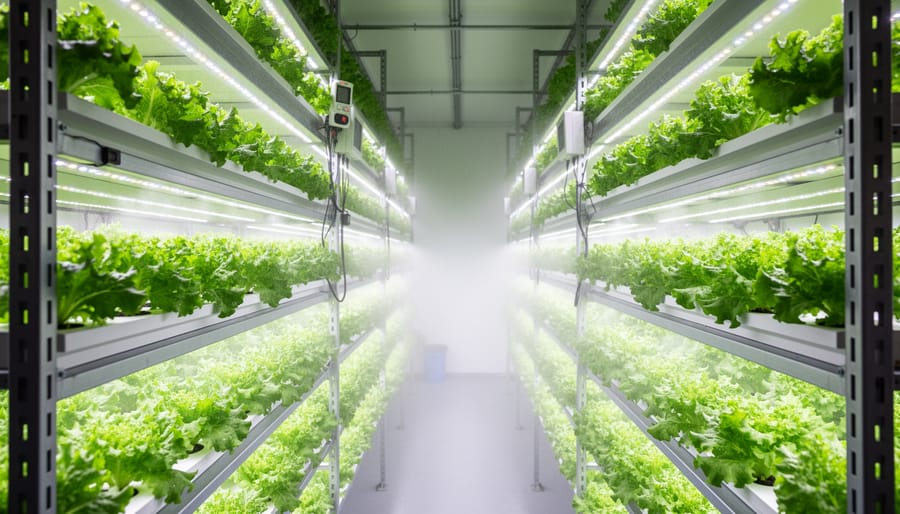
Indoor vertical farming takes the single-crop idea and moves it out of the field. At Home Grown Farm, we grow focused crop lines in controlled environments, using hydroponics and machine learning to manage light, water, and nutrients with a precision that open ground can’t offer. Because the plants never touch soil or weather, many of the risks that make field monoculture worrying simply don’t apply in the same way.
This is a complement to traditional and regenerative field farming, not a replacement. Regenerative growers focus on living roots year-round, crop diversity, and healthier soils, and that work matters in ways a grow room can’t replicate. Indoor systems fit alongside it, supplying consistent produce close to where people live.
Here’s how controlled-environment growing can speak to monoculture-related concerns, along with the honest trade-offs:
- Inputs are managed precisely, so nutrients are delivered to match what each crop needs rather than applied broadly.
- Growing indoors reduces exposure to weather swings and many soil-borne pests.
- Recirculating hydroponic systems can use water more efficiently than conventional field irrigation.
- Energy use, especially for lighting and climate control, remains a real challenge we keep working to reduce.
- The range of crops that are practical indoors is still limited, with leafy greens and herbs leading the way.
- Indoor systems don’t build soil or support biodiversity the way diversified field systems can.
We think being upfront about these limits is part of the job. Transparency about how food is grown, careful attention to safety, and a commitment to conserving water and land are what make this approach worth trusting. Used alongside healthy field farming, vertical farming adds one more tool for a resilient food supply.
Monoculture Farming FAQs
What exactly is monoculture farming?
Monoculture farming is the practice of growing a single crop on the same land, often season after season. It simplifies planting, care, and harvest, which is why many large-scale growers adopted it.
What is the difference between regenerative agriculture and monoculture?
Regenerative farming focuses on keeping living roots in the soil year-round, maximizing crop diversity, integrating livestock, and reducing soil disturbance. Monoculture centers on one crop, so the two prioritize very different things.
Why is monoculture farming criticized?
The sustainable agriculture movement began partly as a critique of soil erosion, chemical misuse, and monoculture farming. Concerns generally center on soil health, pest and disease vulnerability, and reduced biodiversity.
Is monoculture always bad?
Not necessarily. It has helped farmers produce reliable harvests efficiently at scale, and its drawbacks depend heavily on how it is managed, including whether crops are rotated and how soil is cared for.
These answers share a common thread: no single method is a perfect fit everywhere. Diversity in the field supports biodiversity and lessens reliance on monocultures, while focused, single-crop production still has a role when it’s managed thoughtfully. Controlled indoor systems add another option for growing consistent crops, and they bring their own considerations, including how growers handle food safety. The most resilient food future will likely blend traditional, regenerative, and technology-driven approaches rather than relying on any one of them alone.
Monoculture farming, at its simplest, means growing one crop on the same land, and it earned its place by feeding a lot of people efficiently. Uniform planting, matched machinery and predictable harvests are real strengths, and the farmers who rely on them deserve respect for what they deliver.
The conversation is shifting, though. Regenerative practices keep living roots in the soil year-round, raise crop diversity and reduce soil disturbance. Diversified systems spread risk across more than one crop. Indoor vertical farming adds another option, growing focused crops in controlled conditions with less exposure to weather and soil-borne pests. None of these has to replace the others, and each has its own challenges. Used together, they give us a food system that’s more resilient and better at conserving soil and water. That’s a future worth growing toward.