
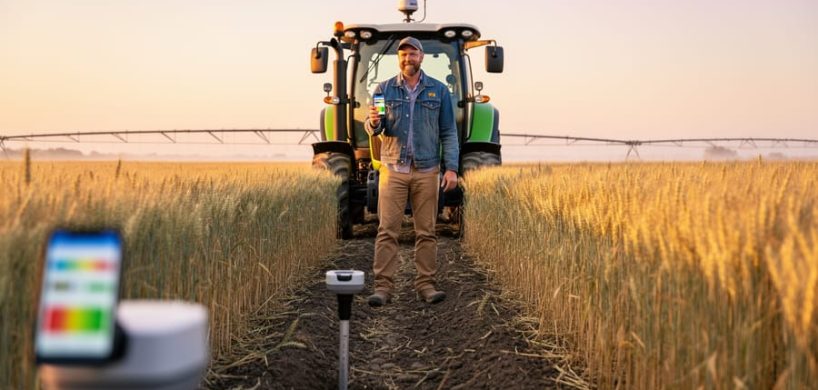
Arable farming stands at one of the most transformative crossroads in agricultural history, where centuries-old soil cultivation meets precision technology that can predict yield outcomes down to the square meter. As of 2026, the 1.5 billion hectares of arable land worldwide must feed an increasingly urban population while contending with unpredictable weather patterns, depleted soil nutrients, and water scarcity that would have seemed unthinkable a generation ago.
The stakes couldn’t be higher. Traditional crop production on open fields still supplies roughly 95% of the world’s calories, yet farmers now deploy soil sensors that communicate with satellites, use AI-driven planting schedules, and integrate regenerative practices that actually rebuild degraded land. This isn’t about replacing conventional agriculture with high-tech alternatives. It’s about evolution.
Consider the reality: a wheat farmer in Kansas now monitors soil moisture through smartphone apps while implementing cover cropping strategies that sequester carbon. Meanwhile, emerging technologies like controlled-environment agriculture address food security in regions where arable land simply doesn’t exist. These approaches complement rather than compete with field-based crop production.
The innovations reshaping arable farming in 2026 span from genome-edited drought-resistant varieties to autonomous tractors that reduce fuel consumption by 40%. Yet the foundation remains unchanged: understanding soil health, crop rotation, and the delicate balance between productivity and sustainability. What’s different now is our ability to measure, predict, and optimize these variables with unprecedented precision, turning farming from an art passed down through generations into a data-informed science that still honors traditional wisdom.
The State of Arable Farming in 2026
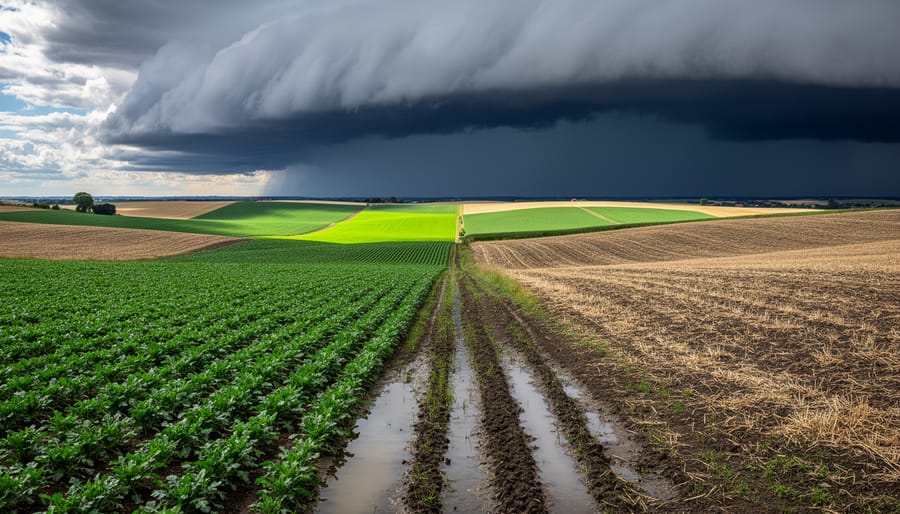
Arable farming stands at a crossroads. Traditional field-based crop production still feeds billions, but the pressures mounting against it have reached critical mass. Climate variability tops the list: unpredictable rainfall patterns, extended droughts, and sudden temperature swings are making historically reliable growing regions less dependable. Farmers who once planned seasons around consistent weather patterns now face yield volatility that threatens both profitability and food security.
Soil degradation compounds the climate challenge. Decades of intensive cultivation have depleted organic matter and eroded topsoil in many prime agricultural areas. Without healthy soil structure, crops struggle to access nutrients and water, even when conditions otherwise favor growth. This degradation isn’t easily reversed, rebuilding soil health takes years of intentional management and often requires reducing short-term productivity to achieve long-term sustainability.
Water availability has become the limiting factor across major grain-producing regions. Aquifers are depleting faster than they recharge, and surface water sources face increased competition from industrial and residential users. Irrigation infrastructure that once seemed abundant now operates under strict rationing in many areas. The crops we rely on, wheat, corn, soybeans, rice, all demand substantial water inputs during critical growth phases, yet those inputs are increasingly uncertain.
These converging pressures explain why 2026 marks an inflection point for the industry. Arable farmers can’t simply produce more using traditional methods; the resources won’t support it. Instead, the sector is fundamentally rethinking cultivation approaches, embracing precision technologies that optimize every input, and exploring how indoor controlled-environment systems can complement field production. The question isn’t whether arable farming will change, but how quickly it can adapt while maintaining the massive scale needed to feed a growing population.
Technology Transforming Traditional Crop Production
Real-World Innovation: 2026 Industry Events Driving Change
The agricultural community isn’t waiting for change to happen. This year, two major Canadian industry gatherings are mapping the future of crop production through hands-on workshops, technology demonstrations, and peer-to-peer knowledge sharing.
| Event | Dates | Location | Key Focus Areas |
|---|---|---|---|
| Western Canadian Crop Production Show | January 13-15, 2026 | Saskatoon, Saskatchewan | Crop production innovations, equipment, regional solutions |
| AgEx 2026 | November 17-19, 2026 | Calgary, Alberta | Farm business management, digital tools, emerging technologies |
The Western Canadian Crop Production Show brought together producers at Prairieland in Saskatoon in mid-January. This regional event addresses the specific challenges Prairie farmers face, from shorter growing seasons to soil management in continental climates. Attendees connect with equipment suppliers, seed developers, and agronomists who understand the realities of farming at northern latitudes.
AgEx 2026, Canada’s premier farm business management conference, shifts the conversation toward operational excellence. The program includes keynote presentations, concurrent learning sessions, panel discussions, and interactive experiences covering strategic planning and business resilience, financial management, and risk management. Notably, dedicated tracks on digital tools and emerging technologies demonstrate how data-driven decision making is becoming standard practice rather than experimental.
Leadership and people management sessions reflect another evolution: farms are increasingly sophisticated businesses that need strong organizational structures. The inclusion of farm transition planning acknowledges that successful operations must think generations ahead, not just seasons.
These gatherings serve a practical function beyond networking. Farmers test equipment, compare notes on what actually works in their soil types and microclimates, and separate marketing hype from genuine innovation. The conversations happening in Calgary and Saskatoon this year will shape purchasing decisions and operational changes for the next several growing seasons.
Where Vertical Farming Meets Arable Agriculture
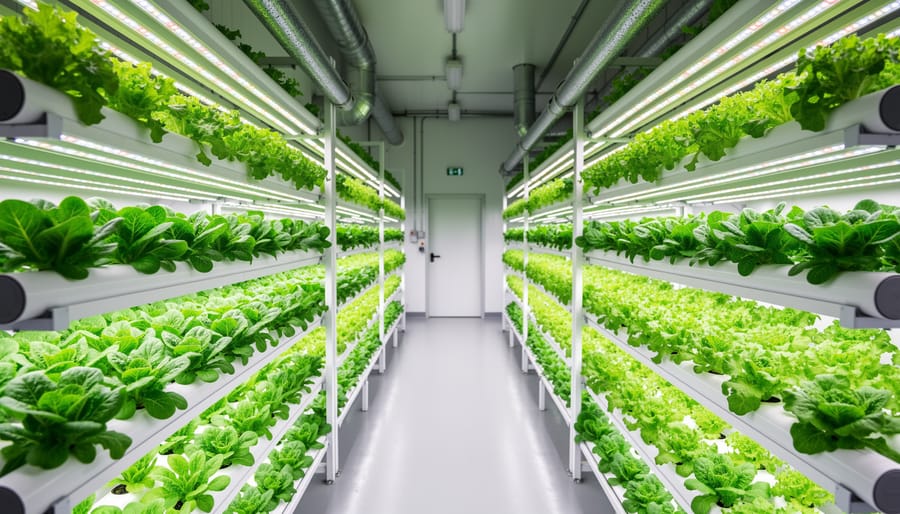
The relationship between vertical farming and traditional arable agriculture isn’t a competition, it’s a strategic partnership. While field-based crop production continues to dominate grains, oilseeds, pulses, and root vegetables that require space and specific soil conditions, indoor systems excel at producing leafy greens, herbs, and specialty crops year-round regardless of weather. Vertical farming trends in 2026 show these systems addressing supply chain vulnerabilities for high-value, fast-growing crops while traditional farms maintain their essential role in staple food production.
Controlled-environment agriculture solves problems that outdoor farming can’t easily address. Hydroponics eliminates soil-borne diseases, reduces water consumption by up to 95 percent compared to field irrigation, and allows precise nutrient delivery that maximizes growth rates. The controlled conditions mean no pesticides, predictable harvest schedules, and crops grown within miles of urban consumers rather than shipped cross-country. However, the energy requirements for hydroponic lights and climate control make these systems economically viable only for crops with high market value and rapid turnover.
Traditional arable farming remains irreplaceable for calorie-dense crops. Wheat, corn, canola, and soybeans grown across prairie landscapes deliver the volume and affordability that feed populations at scale. These crops benefit from natural sunlight, rain, and soil ecosystems that indoor systems can’t replicate cost-effectively. The land footprint might be larger, but the energy inputs per calorie produced remain lower for field crops.
The future lies in recognizing each system’s strengths. Vertical farms provide fresh produce to cities year-round while reducing transport emissions. Arable operations supply the grains and proteins that form dietary foundations. Together, they create a diversified, resilient food system that adapts to climate pressures without abandoning either approach. Innovation enhances both rather than forcing an unnecessary choice between them.
Sustainability Solutions for Both Systems
Measuring Environmental Impact
Modern arable farming operations now have access to sophisticated tools that transform environmental stewardship from aspiration into measurable practice. Carbon footprint calculators, soil health monitoring systems, and water usage tracking software provide farmers with granular data about their operations’ impact. These metrics matter because they create accountability and demonstrate real progress to consumers who increasingly scrutinize where their food comes from.
Certification programs like Regenerative Organic Certified and the Sustainable Agriculture Initiative Platform give farms third-party validation of their environmental practices. These certifications evaluate soil management, biodiversity protection, water conservation, and chemical reduction. They function as trust signals, particularly valuable in 2026’s market where transparency drives purchasing decisions.
Digital platforms now allow farms to share their sustainability data directly with consumers through QR codes on packaging or dedicated transparency portals. A shopper can scan a code and see water savings percentages, carbon sequestration rates, or pesticide reduction trends for the specific farm that grew their produce. This level of openness extends beyond crop production to encompass food safety protocols and supply chain tracking.
The shift toward measurement creates competitive advantage. Farms that document improvements in biodiversity scores or reductions in synthetic inputs can command premium prices and secure contracts with retailers committed to sustainability goals. Data transforms environmental impact from an abstract concern into a business asset.
Building Resilience Into Food Production
Food security in 2026 isn’t about choosing between traditional arable farming and innovative indoor systems, it’s about strategically combining both approaches to withstand whatever climate disruptions come next. A diversified agricultural portfolio spreads risk across multiple production methods, crop varieties, and growing environments, ensuring that when one system faces challenges, others can maintain output.
Consider how extreme weather patterns now affect field crops: a drought that devastates outdoor wheat production doesn’t impact climate-controlled vertical farms, while an energy crisis that raises costs for indoor operations leaves traditional field farming largely unaffected. This complementary relationship creates buffer zones in our food supply that didn’t exist when we relied exclusively on conventional agriculture.
Resilient food systems don’t eliminate risk, they distribute it across diverse production methods so no single climate event can cripple the entire supply chain.
Technology serves as the backbone of this resilience strategy. Precision agriculture tools allow arable farmers to adapt planting schedules based on real-time weather forecasting, optimize irrigation during dry spells, and select drought-resistant crop varieties suited to changing conditions. Meanwhile, indoor systems provide year-round production consistency regardless of external weather patterns, maintaining supply when outdoor harvests fall short.
The risk management framework emphasized at industry events like AgEx 2026 reflects this shift toward diversification thinking. Farmers are now evaluating their operations not just for profitability but for adaptability, assessing which crops work best in controlled environments versus open fields, where investments in climate adaptation technologies make sense, and how to balance resource allocation between traditional and innovative methods.
This approach transforms vulnerability into strength. Rather than viewing agricultural evolution as abandoning proven methods, forward-thinking producers recognize that combining traditional field expertise with cutting-edge controlled-environment capabilities creates the most secure path through an uncertain climate future.
The path forward for global food security doesn’t require choosing between tradition and innovation. It demands embracing both. Arable farming is undergoing its most significant transformation in generations, adopting precision tools and data-driven practices that reduce environmental impact while maintaining the scale needed to feed billions. Meanwhile, vertical farming and controlled-environment systems address specific production gaps, extending growing seasons and bringing fresh produce closer to urban populations.
Together, these approaches form a resilient food system capable of weathering climate uncertainty. The farmers attending events like the Western Canadian Crop Production Show and AgEx 2026 understand this reality. They’re exploring how digital tools and emerging technologies can make their operations more efficient and sustainable, not abandoning the land but farming it smarter.
This dual-track evolution reflects a maturing industry that recognizes complexity. Some crops thrive in fields under open skies; others flourish in optimized indoor environments. Success lies in matching production methods to specific needs rather than forcing a single solution across all scenarios. For environmentally conscious consumers and forward-thinking businesses, this means supporting both the modernization of traditional agriculture and the scaling of innovative systems.
The future of farming isn’t a zero-sum competition. It’s a collaborative reinvention where transparency, technology, and environmental stewardship drive progress across every method of growing food.