
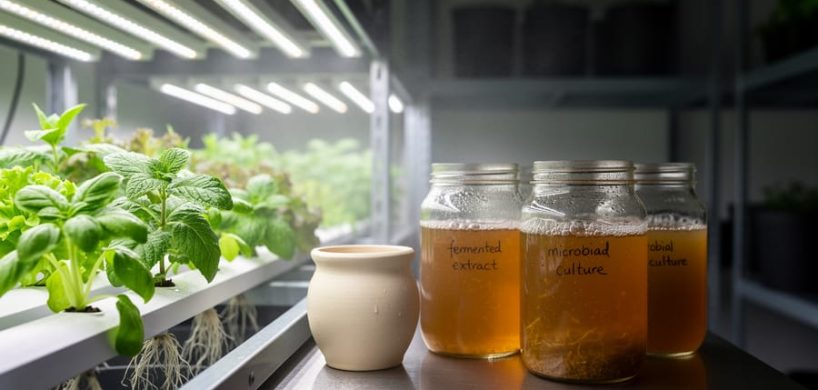
Korean Natural Farming represents a fundamentally soil-based agricultural philosophy that relies on cultivating indigenous microorganisms, creating fermented plant and animal inputs, and building living soil ecosystems over time. If you’re running hydroponic or indoor growing systems, you need to understand upfront that KNF wasn’t designed for controlled environment agriculture. The technique originated in South Korea through the work of Master Cho Han-kyu, who developed methods to collect and propagate naturally occurring beneficial microbes from forest floors, create nutrient-dense ferments from local plant materials, and rebuild soil health without synthetic inputs.
The regenerative principles behind KNF have attracted considerable attention in 2026 as growers seek alternatives to conventional agricultural inputs. However, the practical reality for indoor and hydroponic growers is more complex than many online discussions suggest. Most KNF preparations involve solid organic materials, living soil biology, and fermentation processes that don’t translate directly to recirculating nutrient solutions or soilless media. Claims about dramatic cost reductions and universal effectiveness often come from outdoor soil-based operations working in completely different contexts.
This doesn’t mean KNF holds no value for controlled environment growers. Certain principles around microbial diversity, fermentation science, and plant-based nutrients offer potential applications worth exploring critically. The key is understanding which techniques might adapt to your specific system and which remain firmly rooted in traditional agriculture, then making informed decisions based on your actual growing conditions rather than aspirational philosophy alone.
What Korean Natural Farming Actually Is (And Why It’s Trending)
Korean Natural Farming originated in South Korea during the 1960s through the work of Master Cho Han-kyu, who developed a regenerative agriculture system based on cultivating and applying indigenous microorganisms from local environments. The methodology centers on creating nutrient-rich inputs through fermentation and microbial collection rather than purchasing commercial fertilizers, a philosophy that has gained renewed attention as growers seek alternatives to synthetic agriculture.
The system relies on several key inputs, each serving specific nutritional and biological functions:
- Indigenous Microorganisms (IMO)
- Beneficial bacteria and fungi collected from undisturbed forest soil and cultured through a multi-stage process to build soil biology and break down organic matter.
- Fermented Plant Juice (FPJ)
- A nutrient extract created by fermenting fast-growing plants with brown sugar, providing readily available growth hormones and minerals.
- Fermented Fruit Juice (FFJ)
- Sugar-fermented fruits that supply simple carbohydrates and enzymes to feed soil microbes and plants during fruiting stages.
- Fish Amino Acid (FAA)
- A protein-rich liquid fertilizer made by fermenting fish waste with brown sugar, delivering nitrogen and amino acids for vegetative growth.
- Water-Soluble Calcium (WS-Ca)
- A calcium supplement produced by dissolving eggshells or bones in vinegar, addressing common nutrient deficiencies in organic systems.
The hands-on nature of KNF has sparked growing interest among regenerative agriculture practitioners. In November, Darragh Hayes from Luachra led a practical KNF workshop at Local Roots, teaching participants the fundamentals through direct experience with input preparation. This type of workshop activity reflects a broader pattern in sustainable agriculture where growers are exploring biological farming methods alongside vertical farming trends and other innovations.
What matters for indoor growers to understand upfront: KNF was developed specifically for outdoor, soil-based systems where complex microbial ecosystems drive nutrient cycling. The inputs contain living organisms, particulate matter, and variable compositions that align with soil biology but present distinct challenges in controlled hydroponic environments. The fermentation processes and microbial cultivation techniques assume a soil medium that can buffer pH changes, filter particles, and support diverse biological communities, conditions fundamentally different from recirculating nutrient solutions or inert growing media.
The Compatibility Challenge: Soil Biology vs. Controlled Hydroponics
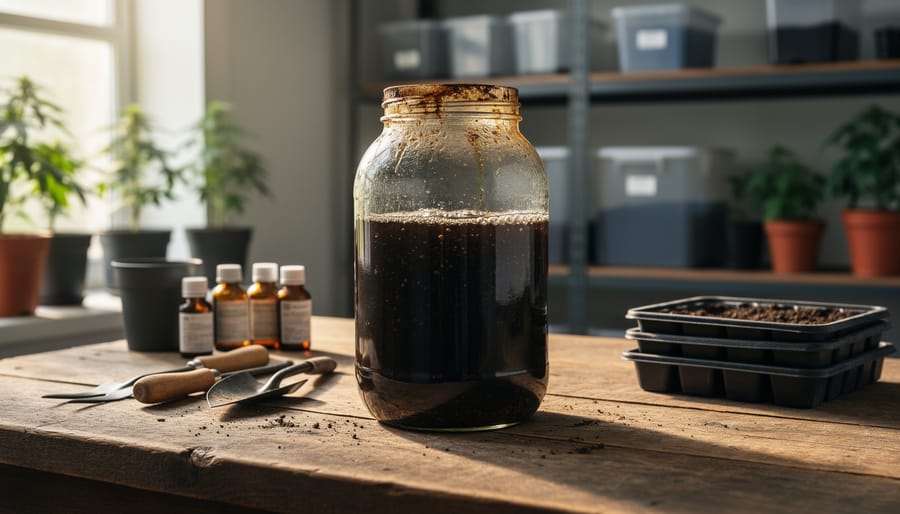
The core challenge with Korean Natural Farming inputs in hydroponic systems isn’t philosophical, it’s engineering. KNF ferments like Indigenous Microorganism (IMO) solutions and Fermented Plant Juice contain suspended solids, active microbes, and complex organic compounds that fundamentally conflict with how precision hydroponics operates.
Hydroponic systems depend on clean, dissolved nutrients moving through pumps, emitters, and grow channels without obstruction. Even filtered KNF preparations leave microscopic particles that accumulate in irrigation lines and clog drip emitters within days. We’ve seen this firsthand with organic teas in recirculating systems, what works in soil becomes a maintenance nightmare in closed-loop hydroponics.
The microbial aspect presents a different problem. Traditional hydroponics maintains either sterile conditions or carefully selected beneficial microbe populations. KNF inputs introduce diverse, uncontrolled microbial communities that can compete with plants for oxygen in nutrient solutions, create biofilms in reservoirs, and shift pH unpredictably as different organisms multiply. This isn’t a minor inconvenience. Unexpected bacterial blooms can crash dissolved oxygen levels overnight, and the food safety implications of introducing raw ferments to edible crop root zones require serious consideration.
pH stability matters more in hydroponics than soil because there’s no buffering capacity. Soil microbes and mineral particles naturally regulate pH swings. Hydroponic nutrient solutions lack these buffers, so when KNF ferments introduce organic acids and active decomposition, pH can shift outside the optimal 5.5-6.5 range where most nutrients remain available. Constant pH adjustment defeats the efficiency that makes hydroponics appealing.
Some growers report success with heavily filtered KNF extracts used sparingly, but these are experimental adaptations requiring constant monitoring, not proven protocols. The direct transfer that works in regenerative soil systems simply doesn’t translate. Anyone testing KNF concepts in controlled environments needs backup nutrient programs, daily system checks, and realistic expectations about compatibility limits.
Selective Adaptations Worth Exploring for Indoor Growers
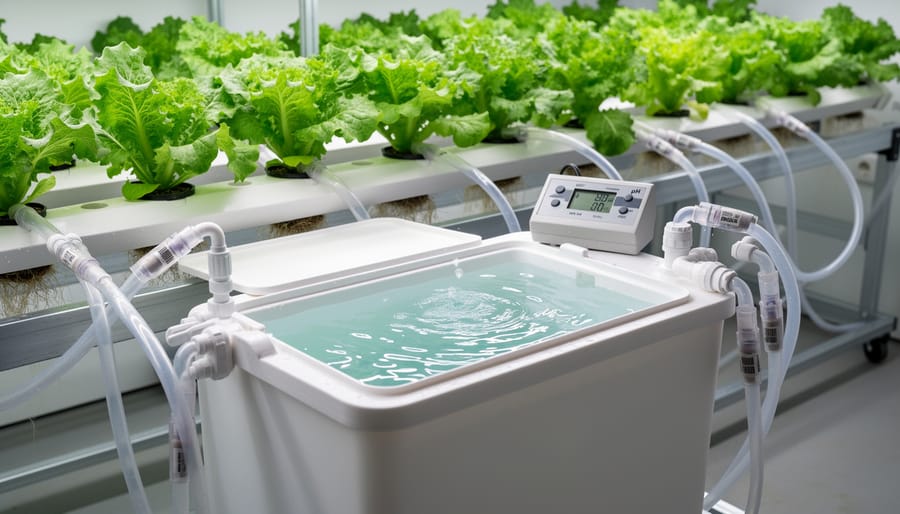
Testing KNF-inspired inputs in hydroponic environments requires careful adaptation and realistic expectations. These approaches represent experimental additions to supplement established nutrient protocols, not wholesale replacements for the precise formulations that hydroponic systems depend on.
Filtered microbial teas offer the most accessible entry point. Rather than introducing raw indigenous microorganism (IMO) solutions directly into reservoirs, growers can experiment with heavily filtered versions during specific growth phases. A double-layer coffee filter or 200-micron screen removes most particulates while preserving water-soluble compounds and some beneficial metabolites. Apply these diluted teas during vegetative growth when plants tolerate biological variability better than during fruiting. Start with a 1:100 dilution ratio, monitor electrical conductivity closely, and maintain your regular nutrient baseline as backup. Even with filtration, expect to clean filters and check lines more frequently than usual.
Fermentation principles adapted for liquid nutrient creation show more promise than direct KNF transplantation. The concept of extracting plant-available nutrients through controlled decomposition works, but hydroponic applications demand sterile end products. Some growers ferment high-potassium inputs like comfrey or banana peels in anaerobic conditions, then filter the resulting liquid multiple times and pasteurize it before diluting into reservoir systems. This preserves soluble nutrients while eliminating the microbial unpredictability that clogs emitters and destabilizes pH. Document your nitrogen, phosphorus, and potassium contributions carefully to avoid nutrient imbalances.
| KNF Input | Original Use | Potential Indoor Adaptation | Hydroponic Compatibility |
|---|---|---|---|
| IMO Solution | Soil inoculant | Heavily filtered foliar spray | Low (clogs systems) |
| Fermented Plant Juice | Soil drench | Pasteurized, filtered liquid nutrient | Moderate (needs processing) |
| Fish Amino Acid | Nitrogen source | Foliar application only | Low (contamination risk) |
| Composted inputs | Soil amendment | Substrate pre-treatment | High (for semi-hydroponic) |
Foliar applications bypass root zone contamination entirely and represent the safest testing ground. Diluted fermented plant juices, fish amino acids, or filtered microbial solutions can be sprayed directly on leaves without threatening system sterility. Apply these during early morning or late afternoon to improve absorption, and watch for phytotoxicity signs like leaf burn or discoloration. Start with extremely dilute concentrations and increase gradually based on plant response.
For semi-hydroponic setups using solid substrates, composting KNF principles work well in hydroponic growing media preparation. Pre-treat coco coir, perlite mixes, or rockwool alternatives with composted organic matter following KNF decomposition methods, then flush thoroughly before use. This introduces beneficial biology to the growing medium while keeping the nutrient solution clean and controllable. The substrate holds microbial populations separately from the recirculating water, reducing contamination risk while potentially improving nutrient uptake efficiency.
Treat every adaptation as a controlled experiment with proper documentation. Record application rates, timing, plant responses, and any system issues. Most importantly, keep your standard hydroponic nutrient program running alongside these additions so you can quickly revert if problems develop.
Where KNF Philosophy Aligns With Advanced Indoor Agriculture
The philosophical foundation of Korean Natural Farming shares surprising common ground with the engineering goals driving advanced hydroponic systems even when the practical techniques diverge. Both approaches prioritize resource efficiency, minimize waste, and aim to create self-sustaining production cycles that reduce dependency on external inputs.
Modern controlled environment agriculture already embodies several core KNF principles through technological means. Recirculating hydroponic systems, for instance, achieve the same nutrient cycling philosophy that KNF pursues through composting and fermentation, they just accomplish it with pumps, sensors, and precise dosing rather than microbial fermentation. The water and nutrient conservation in a closed-loop system mirrors KNF’s emphasis on capturing and reusing farm resources rather than importing synthetic inputs and discarding waste streams.
Research into beneficial microbes for hydroponic environments reflects another conceptual overlap. While KNF cultivates indigenous microorganisms from local soil, controlled environment growers are exploring specific strains of bacteria and fungi that enhance nutrient uptake, suppress pathogens, and improve plant resilience, essentially applying the same biological support concept with laboratory-isolated organisms that won’t compromise system sterility. Compost tea research in soilless systems follows similar logic, seeking to harness microbial benefits while filtering out particulates that could clog emitters.
The waste-to-resource conversion that defines KNF also appears in advanced indoor operations through different mechanisms. Growers capture condensate for irrigation reuse, compost plant waste into substrate amendments, and design systems where one crop’s outputs become another’s inputs. Even if the methods differ, the underlying commitment to circular resource flows aligns closely.
What controlled environment agriculture adds to these shared sustainability goals is precision monitoring and safety protocols. Sensors track exactly how biological inputs affect pH, dissolved oxygen, and nutrient availability in real time, allowing growers to maintain the efficiency KNF values while preventing the system instability that uncontrolled ferments might cause. This marriage of traditional ecological wisdom with modern measurement technology represents farming’s future, not a conflict between old and new.

A Realistic Approach: Combining Traditional Knowledge with Precision Technology
Growers who want to explore biological inputs inspired by traditional fermentation practices need a methodical testing framework that protects their primary production systems. Hydroponic operations depend on environmental stability, so any experimentation with new inputs requires isolation protocols and careful monitoring before wider implementation.
The testing process should follow a structured approach that separates experimental inputs from proven nutrient protocols:
- Designate a single plant or small isolated reservoir (5-10 gallons maximum) as your test unit, completely separate from main production systems.
- Install dedicated monitoring for pH, electrical conductivity, and dissolved oxygen in the test system, checking readings at least twice daily.
- Filter any fermented liquid inputs through 1-micron or finer filters to remove particles that could clog emitters or provide substrate for unwanted microbial growth.
- Start with 10% of any recommended application rate, then wait 72 hours while monitoring plant response and system parameters before any increase.
- Document every input with date, concentration, filtration method, and plant response photographs to build a reliable reference database.
- Maintain your standard nutrient solution as backup, ready to flush the test system immediately if you observe wilting, discoloration, foam buildup, or pH swings exceeding 0.5 units.
Modern sensor technology and data logging tools make this experimental approach much safer than it would have been even five years ago. Automated pH monitors can send alerts when biological inputs cause unexpected shifts, while dissolved oxygen sensors catch early signs of system instability. Some growers are using basic spreadsheet tracking to correlate specific inputs with growth measurements, creating their own evidence base rather than relying on anecdotal reports.
This controlled testing respects both the potential value in traditional fermentation knowledge and the engineering reality that hydroponic systems require predictable, stable inputs. The goal is not to replace precision nutrient management, but to identify whether specific biological components might offer measurable benefits worth the added complexity.